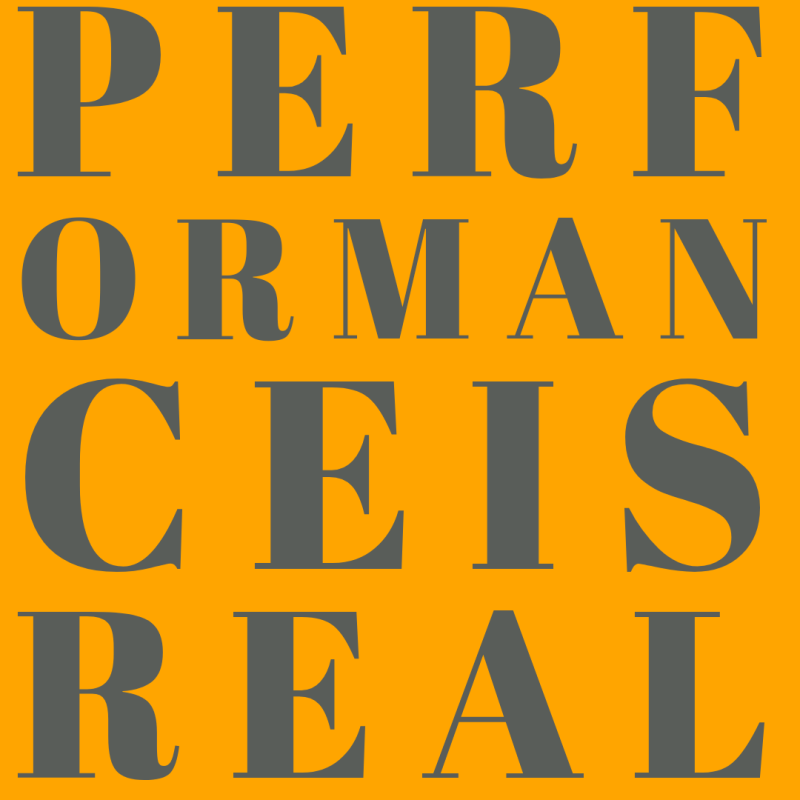
Like a good thespian, I was deeply insulted when I heard the quote by performance artist Maria Abramovic that theater was fake and performance art was real. I thought that was a bit pretentious.
“To be a performance artist, you have to hate theater. Theater is fake… The knife is not real, the blood is not real, and the emotions are not real. Performance is just the opposite: the knife is real, the blood is real, and the emotions are real.”
This is what she said to an art critic who asked her to define the difference between theater performance and artistic performance.
ugh, she’s not wrong I thought to myself, while still feeling the burn of the insult–not quite ready to let go of my sense of injury. It would only be after I learned about performance art, her performances in particular, that I came around to her point.
Abramovic is a legend—both famous and infamous. She has endured performances included stabbing her hand with knives, allowing public audiences to abuse her body, sitting in silence for 700 hours, and setting herself in the middle of a fire—a performance where due to depleted oxygen, she lost consciousness and had it not been for someone stepping in she would have died.
Just listing these performances like this, however, fails to capture what she is about. In every performance she seeks transformation—both for herself as well as her audience. She is not just laying in the middle of flaming five pointed star, or stabbing her hand—she is using her physical, emotional, social and psychological endurance to invite transformation. The viewer is also invited into her transforming acts through the participatory act of witnessing.
Nowhere is this more evident than in her 2012 performance retrospective, The Artist is Present. To this day, I consider this the most moving and poignant performance that I know about. In this work Abramovic sits on a chair, in silence, and across from her there is an empty chair. Audience members were invited to take turns sitting across from her. It is so simple: the artist offers her presence. Again, just listing the act does not get to the experience of it. In the documentation of her work you see those who choose to sit across from her undone at times, moved to tears by her steady eye contact and unflinching presence.
Maybe the real problem in trying to distinguish theater performance from performance art in a language that lacks words to articulate these distinct experiences. I have done both types of performances, and while they are distinct, there is more overlap. Both require the emotional and physical endurance of the performer, as well as immense inward focus. Both tap into the empathy of the audience as a core part of the work. In both types of performances, I have experienced transformation. While the tattoo on my arm from my art performance remains and my hair and makeup from past characters do not—I consider both to be real experiences.
I love her quote now, but I hope she’s wrong. I hope I can be both thespian and performance artist. I no longer think she is pretentious for saying it though. I think language just fails artists who push on the boundaries of human experience.
 Alexandra Ross Works