
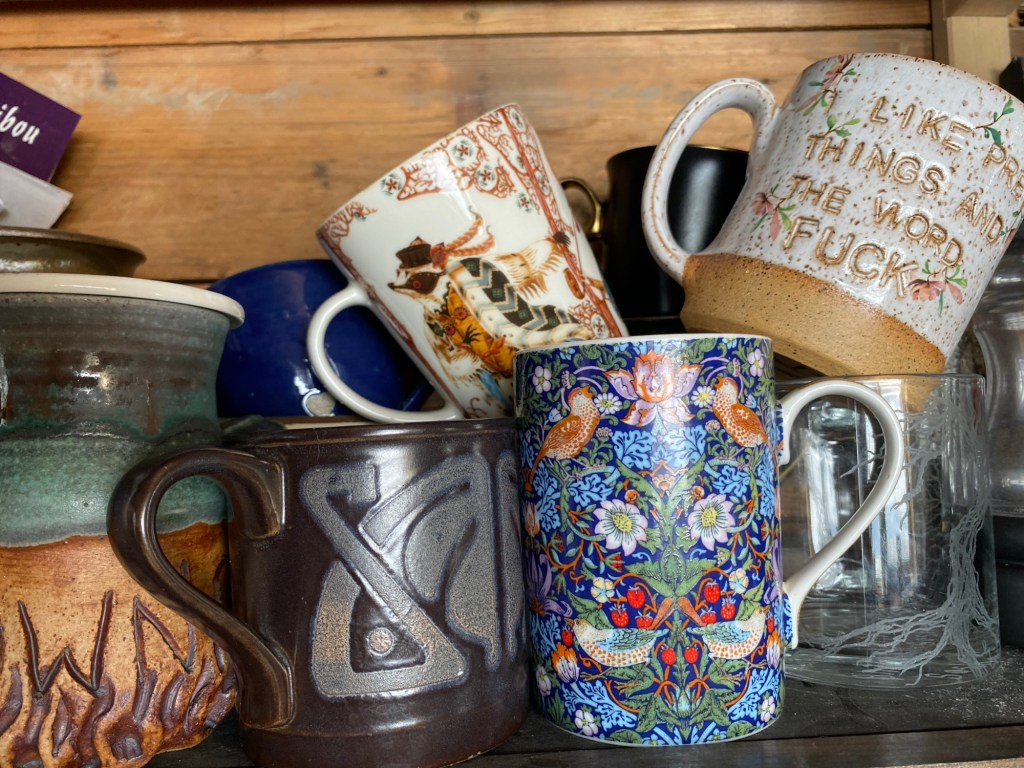
I have always known I have unsophisticated taste. I’ve never gone for clean lines, sleek designs or minimalist aesthetics. I want tangles. I want to see wildness and patterns that look like chaos until you spend time with them. I like pretty things, like birds and botanicals. I love Art Nouveau and I adore celtic knotwork. I am a die hard romantic maximalist who tends towards complexity. I own it, and have tried to keep it under control.
But now I am second guessing myself.
I have always felt slightly chagrined about my personal taste, but I didn’t know that these feelings of shame are by design. I learned this from artist, writer, and researcher Isa Segalovich. She posted a reel announcing her contract summarizing her research to write a book why ornament is missing in contemporary design.
It’s one of those reels I watched, then watched again, liked and bookmarked, put my phone down, picked it back up, and then watched like 7 more times. With every replay I felt my sense of taste inferiority being lifted out from the little Drawer of Shame I keep it in, and being allowed to stretch open its wings!
You should watch her reel (and all her content!) but, very briefly, she links the loss of ornament in contemporary design to racism, particularly in the racist and fascist ideas of Adulf Loos–one of the most influential modernist architects. She references his essay, “Ornament and Crime” where he writes that ornament is childlike, degenerate and backwards.
The thing about ornament that she points out is that it is found in every folk culture around the world. In this and in many, many other reels, essays, and interviews, she draws the lines between minimalism, racism, and cultural erasure. Whereas folk culture is rooted in expression and human experience, minimalism is rooted in the idea of not wasting labor on useless expression. In minimalism function is prioritized over expression–and that is the key word: prioritized.
If you prefer minimalism, that’s totally fine–but when you believe your taste is superior because of that preference, that is where you run into trouble. Ideas of purity and minimalism-as-superior are rooted in white supremist values. Many of these values go back to the protestant and industrial revolutions with the belief that idleness is immoral, and labor should not be “wasted” on useless things like cultural expression. This idea fuels racist beliefs that societies that prioritize efficiency, work ethic, and functionalist values are superior to societies who prioritize expression and leisure time.
AKA, White, Anglo-Saxon, Protestant, culture. This trickles into so many spheres of expression including food, textiles, public spaces, tattoos, art, design, and, of course–architecture.
There is so much more here to explore, and my mind has just expanded into this topic–so more to come! However, for today, if you, like me, are a closet Ornamentalist, I hope you feel invited by Isa Segalovich’s research to consider celebrating your taste. Pull out that overly decorated mug you hide in the cupboard and feel the love that is folk tradition surrounding you while you sip your favorite drink.
 Alexandra Ross Works
Society is in the position to decide what is “good” and “bad” art.
But then, society is also an idiot. Which is why it seems wisest (to me at least) to ignore society’s opinions about pretty much everything 😆