

If you are reading about art and have felt utterly lost, confused, alone, cold and scared–fear not! This is normal. You have probably just encountered “International Art English.”
For me, learning this language is like being a kid again, patiently tolerating adult humor. You offer some laughter to make them feel good and fit in, but what is being said is not nearly as funny as a good knock-knock joke. If you ask adults to explain why something is funny, if they engage at all, there is a sense that they are tolerating you just as much as you are tolerating them. There is possibly some mutual eye rolling.
Learning how to engage contemporary art writing has been a lesson of patience, like tolerating boring adults. I have read through earnestly written statements without comprehending the meaning of the words, and have listened to folks eagerly explore and debate details of work and have been unable to follow the conversation. In fact I have felt deliberately left out–uninvited to the secret club.
This experience of bafflement and exclusion is so common that in 2012 artist David Levine and sociologist Alex Rule coined the term, International Art English (IAE) in an essay on that topic. After analyzing texts, statements, wall titles and over 14 thousand press releases, they write, “This language has everything to do with English, but is empathetically not English.” It is a language that is specific to the art world and they place its origins in the 1970’s in German and French academic publications. IAE then went on to be much more widely disseminated through the internet.
In this essay they ask, “Can we imagine an art world without IAE?” I feel like they might as well ask, “can the art world exist beyond elitism, scarcity, and gate keeping?”
The answer is: Yes!
Yes it can. Or, I certainly hope so. There are some fantastic examples of critics, artists and galleries whose use of language is invitational rather than exclusive. If you’re curious what I am talking about, check out The White Pube, “the collaborative identity of Gabrielle de la Puente and Zarina Muhammad.” I aspire to write like them–brave, honest, actually readable, and informed. Plus, their writing is so much fun to read.
So, if you, like me, find yourself in circles where IAE is used, just tell those adults you don’t speak International Art English and ask them to translate. Then maybe offer a killer knock-knock joke as a gesture of good will. You will at once place yourself on the nuclear core of the art world, as well as far past the exterior boundary–possibly of most adult social norms. Very art school.
Besides, who doesn’t love a good knock-knock joke?
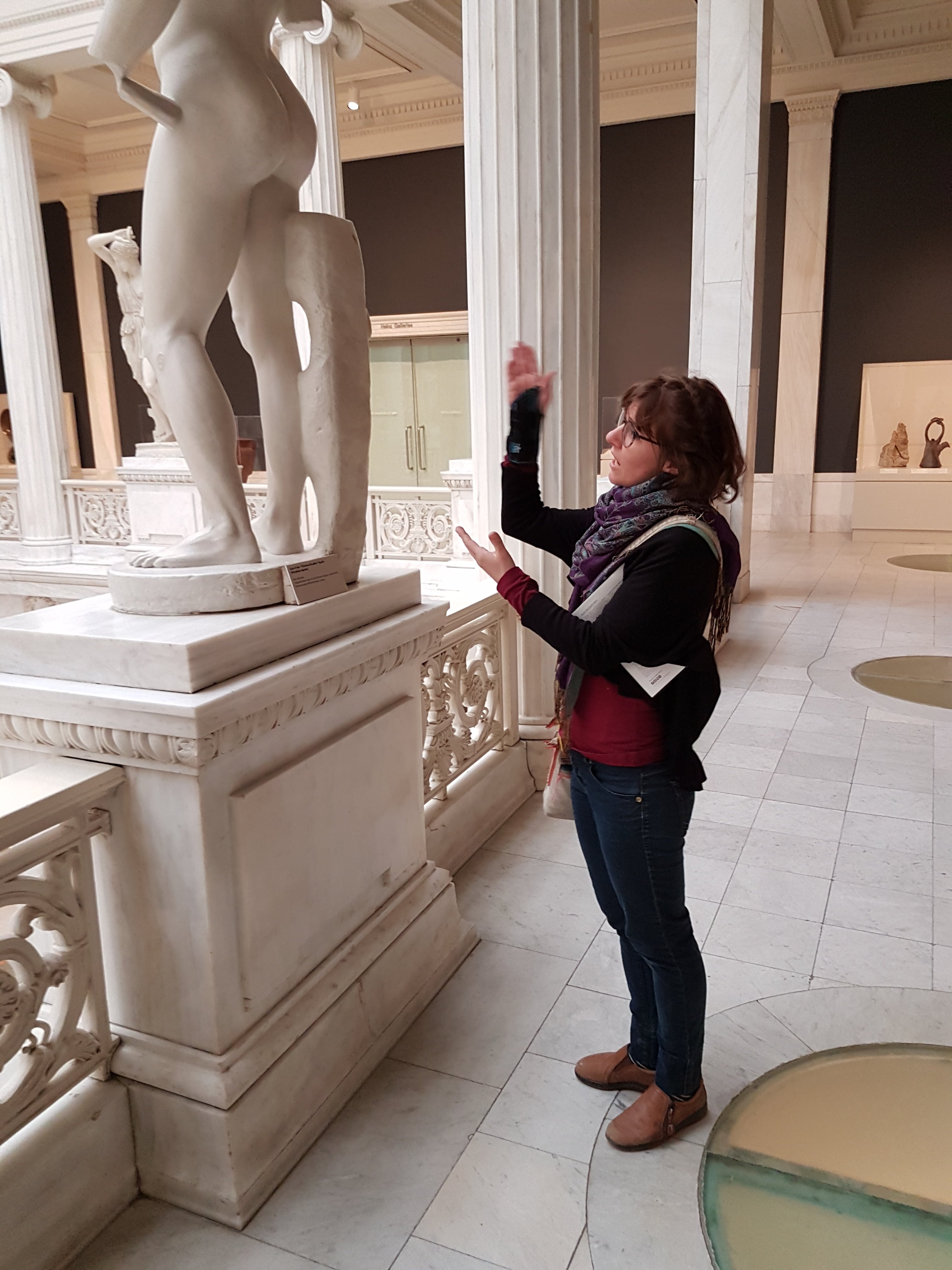
All images taken by me during a trips to Minneapolis in 2017 and 2018 while attending the School of Art at the University of Manitoba. Featured image is of the sculpture hall at the Carnegie Institute Museum of Art. As is the image above of a good cheek. The opening image is of the exhibit, I AM YOU ARE TOO, from the Walker. I was successful at documenting the names and artists whose work I wanted to remember, but failed to document the ones I am using in this post. Shame on me. However, if you follow the link to the sculpture hall, there you can discover, as I have mere 6 years on, that Nicole Eisenman is the artist and the work is titled, Prince of Swords. Also, for a little IAE read about the “arcane allusions” of this sculpture featured on the page.
 Alexandra Ross Works